• Skip to main content
  • Skip to footer

Bellevue Breakfast Rotary Club

Best Darn Club in the World

  • Home
  • Our Events
    • Discussions
      • Add New Post
    • Rotary International Calendar
    • Reveille Archive
  • Our People
    • Club Leadership
    • Our Members
      • Birthdays
    • Committees
  • Our Projects
    • Work for Children & Families
    • Environmental Action
    • International Projects
  • Club Tools
    • Payments
      • Club Payments
      • Foundation Contributions
    • Calendars
      • Rotary International
    • BBRC Calendar Feed
    • File Downloads
    • Upload Pics & Videos
  • Business Forum
    • LinkedIn BBRC Forum
    • LinkedIn BBRC Directory
  • Contact
  • Profile
    • Log out
  • Help!?
    • Help – Add a New Event
    • Help – Add a Weekly Program

Committee

February 25, 2013

02/25/2013 by John Martinka Leave a Comment

At a ceremony with the Antigua Ministry of Education today John Martkinka made the following points.

It’s time to stop talking about input and start talking about output. When a project is in its infancy it’s natural to discuss what we’re doing. This could be referencing the number of computers, dictionaries, sewing machines or other “things.”

The next step is to share anecdotal evidence of success. Things like:

  • Students seen with their dictionaries, in use, at school, in shops and restaurants, etc.
  • Attendance rates higher on Fridays because it’s “Chess Days” and chess overpowers Friday skip day.
  • More students have computer access and the computers are well maintained.

We have now moved to the level of true, proven results. When asked about our project it’s time to stop saying that we have brought in over 1,500 computers, 7,500 dictionaries, started sewing lessons, chess programs, etc.

It’s time to say, “We’ve improved the education of the Antiguan students and given opportunity to ladies with no job possibilities. We’ve done this through our donations of computers, dictionaries, sewing machines, the chess program and more. We know the results, they are positive and include:

  1. The passing rate on the Common Entrance Exam for primary students to go to a secondary school is up by 50% in the public schools and 12% in the private schools (private schools started at 82% passing).
  2. 90% of graduating students pass at least one technology class. Ten years ago it was almost zero.
  3. Our sewing project has created a group of a dozen ladies who can now sew family clothes that look like they were bought in a nice store. Three of them are planning a new business to make and sell clothing.

Rotarians and Ministry of Education Officials, I urge you to start talking about the results and the projects sustainability not just what we’ve provided.

DSCN1866 DSCN1996 DSCN2002 DSCN2014 DSCN2017 DSCN2036

Filed Under: Antigua, Antigua 2013, International Service, World Community

February 23, 2013

02/23/2013 by John Martinka Leave a Comment

On Friday, February 22, 2013 there was a ceremony to award a dozen ladies who started sewing lessons one year ago. At that time they barely knew what a pattern is. At the event they models clothes which they made.

DSCN2049 DSCN2018 DSCN2042 DSCN2045

My wife, Jan, and two friends planted the seed when they started basic lessons in 2012. The seed was germinated cared for as the lessons were continued by the head tailor of the Antigua Military. What a great example of cooperation between Rotary, a community center and outside help. The clothes modeled for us was the fruit of all the care and effort.

Sustainability is always a problem in developing nations, yet this project sustained itself and because of that another sewing center was started this month on another part of the island.

We had some incredibly proud ladies who received certificates from the Prime Minister. Besides the clothes, success can also be measured by confidence and self-esteem and opportunity. Jan said that ladies who wouldn’t look you in the eye or speak to you a year ago were now modeling their clothes with flair. The opportunity is because three of the ladies are talking about starting a business making and selling clothes.

Filed Under: Antigua, Antigua 2013, International Service, World Community

February 20, 2013

02/20/2013 by John Martinka Leave a Comment

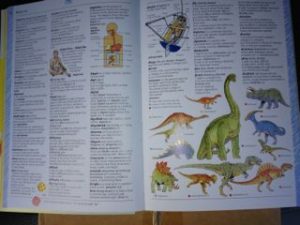
We continued our five-year project of giving an illustrated dictionary to every third grade student in Antigua and Barbuda. After this year, about 7,500 books to kids!

The pictures below are:

  • The dictionary, cover and inside
  • Happy students after receiving their books.
  • A student with a well used book which she received two or three years ago. Zoom in to see the telltale signs that she’s been using it! 🙂

IMG_1045

Dictionary inside

The books are British English dictionaries because Antigua and Barbuda are part of the British Commonwealth and a former British colony.

Dictionaries at TOR


Well used dictionaries


Filed Under: Antigua, Antigua 2013, International Service, World Community

February 18, 2013

02/18/2013 by John Martinka Leave a Comment

The first picture is of our students loading computers onto bare desks for a computer lab in the State College engineering school, about 10:00 am.

The second picture is of the finished lab, about 20 computers, pretty powerful Dell’s that will run AutoCad software, about 3:00 pm.

The third picture is happy kids at a primary school after their computer lab was installed on February 18, 2013.

All computers have Windows 7, Office, Deep Freeze and other software.


Antigua State College start

Finished lab


Happy Kids

Filed Under: Antigua, Antigua 2013, International Service, World Community

Mt. Rainier Climb Summary and Pictures

08/17/2012 by Paul Osborn Leave a Comment

Steve Waltar - Mt. Rainier Climb Aug 4-6 2012
Steve Waltar – Mt. Rainier Climb Aug 4-6 2012

After the months of training (I certainly put in many hours on the Bellevue Club Stairmaster with up to almost 50 pounds in my backpack – this was really the toughest part of my day, and I did lots of weekend climbs – mostly in the “Issaquah Alps” {Mt. Si, Rattlesnake Ledge/Ridge, Mailbox Peak, and closer to home many loops around O.O. Denny Creek Park}), we did our mandatory “check-in” on Friday afternoon, August 3rd with full gear and food.  It took a couple of hours to get an overview, check all our gear, meet other climbers, etc. Fortunately, I was told I could “trim” out some of the excess clothing I had to lighten my pack that probably would have been close to 70 pounds! (ugh)

August 4 – Saturday morning we all arrived by 6 AM in downtown Seattle at the Alpine Ascents headquarters at the bottom of Queen Anne Hill to load up ourselves into the van and our backpacks, ice axes, boots, and gear into the trailer. We drove to Mt. Rainier all piled into the Alpine Ascents Van. During the long and windy ride, I was in the very back and got to know one of the three “paid” climbers – who was not doing the Fred Hutchinson Climb for the Cure, but simply paying Alpine Ascents directly for this chance to climb Mt. Rainier. He was a young and experienced climber from Vancouver, B.C. He had plans to actually climb Mt. Everest either this coming Spring or next Spring – depending upon his training schedule. He was also trying to raise $200,000 for various charitable causes along the way. I really took a liking to Mark and ended up climbing alongside him a fair amount on this Rainier adventure. We all stopped off for breakfast in a small town (might have been Ashford) on the way to Mt. Rainier National Park. Although many of us wanted coffee along with our calories, I made sure to keep drinking lots and lots of water to keep fully hydrated! Our lead guide was from Fairbanks, Alaska, as was another one of the climbers.

I can’t recall when we actually got started from Paradise, but I do know that most of us had used the restrooms a number of times and we had generously applied many layers of suntan lotion and I’m sure we were off before 10 AM on Saturday morning, August 4, of Sea Fair weekend. You can see from my beginning pictures that from the beginning of the climb, it was hot, clear, and we were on paved paths (the Skyline Trail) and then on rock and dirt for the first hour or more of our climb.

Side Note About Melting Snow: I had climbed twice during my training from Paradise (5400’) – to Camp Muir (10,188’). The first time I climbed on Sunday, July 1st – there was snow all the way from Paradise. We didn’t break out of the clouds until we were at about 8000’ – well above Pebble Creek. We made it up through the cloud cover to see the top of Mt. Adams and even the top of Mt. Saint Helens. We made it to about 10,000 feet – with Camp Muir in sight; but alas, one of our climbers felt “altitude sickness” so we turned back a bit short of our goal. The second time I went to Camp Muir on a training climb was on July 22nd. The snow was mostly melted to about 30 minutes or so beyond Paradise – about half way to Pebble Creek (7385’). That day, 4 of us Fred Hutchinson – Climb for the Cure climbers made it successfully to Camp Muir in roughly 5 hours. It was very windy up there (30-40 MPH) so after we had rested a bit, we hurried back down the mountain.

This time, we didn’t reach steady snow until we had crossed Pebble Creek (7385’ – you can see attached picture of part of our climbing crew crossing Pebble Creek with Mt. Saint Helens in the background). We generally stopped for about 10 minutes each hour and we made it to Camp Muir in about 5 ½ hours (with breaks). We had already eaten lunch on the way up but we gathered for a great burrito feast prepared by our guides for dinner that evening at Camp Muir. I was amazed at how many people were up at Camp Muir that day. I counted at least 3 dozen tents! We slept (well, some of us slept from time to time) in a permanent structure. We were encouraged to use our “pee bottles” to A) be quick and B) be silent – rather than to get up, rustle around, open the door, awake others … come back in the door, etc. Although I went to bed early around 9:30 pm, I tossed and turned and got up a number of times before midnight, and even after midnight. The moon was out. A whole group of climbers were “gearing up” with their headlamps on, crampons, etc. – ready to set out on their summit attempt.

Sunday, August 5 – We got up, headed over to our special breakfast “Gombu” hut. Pancakes, eggs, bacon …. Then we had “ice camp” where we learned how to walk correctly with crampons, how to use our ice axe, how to correctly fall and do “ice arrest” and how to be harnessed in with ropes, etc. Once we were all in our harnesses and roped together (about 30 feet or so between climbers) in groups of 3, we headed out across the Cowlitz Glacier, up and over a section of Cathedral Rocks (through an area called Cathedral Gap – while on the dirt and rock, our ropes were shortened to about only 5 feet between climbers), worked our way between Cathedral Rocks on the left and Ingraham Glacier on the right (with Little Tahoma Peak on our right) and made it to “High Camp” (~11,500’) within about an hour. Our guides prepared a hot meal for us (pasta and chicken), we rested a bit, and then we all geared up again to make our climb for the summit on a Sunset Climb.

The view from high camp was truly awesome. We looked directly east over Little Tahoma Peak (at 11,138’ – we were actually above this 3rd highest peak in the State of Washington). A little bit to our left of this peak we could see Mt. Stuart and the Stuart mountain range, further left we could see Glacier Peak, and even further left – essentially to the north we could also see Mt. Baker. A few of us took off our shirts in order to document with pictures how incredibly warm the weather was. Down in Seattle, we heard the weather might hit 90. I really don’t know how hot it got for us but I do know that the freezing level was probably around 17,000’ (well above us) and that our food was melting and spoiling because it was so warm. (Our group leader figured that with hot and clear weather today and a forecast of some clouds on Monday, our best chance to have a good summit climb was Sunday – rather than the initial itinerary.)

Our summit climb took us from around 2:15 PM on Sunday afternoon to somewhere around 6:30-6:50 pm to reach the summit – i.e., the crater on top of Mt. Rainier. Once we left high camp, we went further up Ingraham Glacier, crossed various crevasses, and made our way over to Disappointment Cleaver. The climb got steeper and steeper. It was a beautiful day for a climb. I recall seeing us get higher and higher above Little Tahoma Peak and even recall being higher than Mt. Adams off to the south. Off and on one of the climbers would slip and fall, which would slow us all down but I found it very helpful to catch my breath, reduce my sometimes racing heartbeat and pulse and to hydrate, hydrate, and hydrate yet again. Near the top, we had to “clip in” to some anchored sections of the route – especially near some rather large crevasses that were located on a very steep portion of the mountain. It was a very difficult and steep climb to the summit (i.e., East Crater). Once there, we all sat down to catch our breath (in the very thin air – we had all learned to “pressure breath”). Then we took various pictures of the surroundings, each other, we took quite a few photos of the Climb to Fight Breast Cancer with us 5 climbers. Most of us decided to walk across the crater (it appeared to me to be about 3 football fields across), and over to the west to climb to the “true summit” – Columbia Crest (northwest top) to reach the full 14,411’ elevation – the highest land point in the State of Washington. I know of two of the climbers that needed to turn back and rest – one of whom got altitude sickness, threw up, and focused on breathing for the next 30-45 minutes….

I made it successfully to the very top of Mt. Rainier – to Columbia Crest right around sunset. I could see Puget Sound but due to the declining light really couldn’t make out any buildings of Seattle. The 360 degree view was incredibly amazing. We all took many more pictures and you can see the one of me with my hat and sunglasses off with Mt. Adams to the south in the background. When we came back down from the true summit, our leader signed us into a book and container that sits in a somewhat protected area high up on the mountain. All in all, we spent close to an hour on the top of Mt. Rainier.

I was completely out of water. I did add snow to my water container but it never really melted to give me needed liquid so I got a pounding headache during my descent back to high camp on the way down. We all placed our headlamps on our helmets for our descent because we were rapidly running out of sunlight. The descent was of course just as steep as our ascent had been. We got amazing views, when we looked up from our feet – we were very focused on our footing. In fact, at one point, we all experienced a sort of “God-like silence” and we looked up to see the most amazing pyramid shadow of Mt. Rainier of itself. I took three pictures of this incredible “Stairway to Heaven” view – Mt. Rainier’s own perfectly triangular shadow leading up to the clouds…. I have included this picture with this email.

During the very steep “clip-in” area, my group was the first group down the mountain. As we looked back up to other ‘threesomes’ coming down the steep traverse, it took them a long time (in the dark with headlamps on). One of our climbers – I still don’t know who – fell. Obviously, they didn’t fall far and were okay, but it was a slow grind down the mountain. When we got to Disappointment Cleaver, we roped up tight again at only 5 feet apart in our groups of 3 and we descended the entire Cleaver on the dirt/rock area. When we climbed, we traversed from rock/dirt onto a section of snow/glacier. But on the way down, it was dark, slippery, and at 10 PM at night we really had NO safety net if anyone were to fall and slide a significant and potentially deadly path down the glacier – so we took the very slow, tedious, trip down the dirt and rock of Disappointment Cleaver. It was very tiring on our legs to step down and navigate the rocks. The wind did pick-up a bit, it got colder, and we were all very happy to make it back safely to High Camp by Midnight on Sunday, August 5th. Some people ate some hot food (oatmeal mostly) while others went to bed in our Alpine Ascents Tents at High Camp. I once again (tired as I was) slept like crap. I recall being awake until after 4:15 a.m. when I took a potty break, found my Benadryl … observed another climbing team work their way with headlamps up and over Disappointment Cleaver. Our leaders awoke us at 7 AM – which came too soon for me now that I finally go to sleep!

Monday morning, August 6 – We had oatmeal for breakfast, experienced our first cloudiness and even a few snow flurries. Our leader had been right in having us push for the summit the day before when the weather and view had been so spectacular! The full – heavy – backpack went back on (we had lighter packs for our summit climb on Sunday), we roped up in different groups to account for two of our guides who planned to stay to clean-up and fix some things at high camp. We made it back down Ingraham Glacier and over Cathedral Gap and Cowlitz Glacier to Camp Muir in about an hour. There we were all thrilled to use the outhouse “bathrooms” and re-claim our hiking poles (they were left here when we headed up on Sunday with our ice axes in our hands).

The journey down from Camp Muir took us only two hours! We traveled fast down the mountain – often via “glissade” (a French term for sliding down the mountain in paths instead of walking). When we reached the bottom/end of our climb at Paradise, we enjoyed the plumbing (real bathrooms and running water), got our plastic climbing boots off our feet as quick as possible, relaxed in the sunshine, and waited to depart. We had to wait over an hour because another Alpine Ascents group was going up to Camp Muir – the next group and one of the climbers couldn’t make the climb – so one of our guides had to climb up to meet her and escort her down to join us at Paradise.

In the end we all got to pile into the van and we headed off to Ashford to Whittaker’s to enjoy burgers, beer, and pizza. I managed to actually find a “Rainier Beer” and drank a bottle with significant satisfaction that I had survived, climbed, and luckily conquered Mt. Rainier successfully. I didn’t even look at my aching left ankle until I was at home that night – to notice it had swollen to about 3 times its normal size. I never rolled it, rather it simply rubbed like a ski-boot that doesn’t fit right – for three days. I still lack a bit of feeling in my toes on both feet, but this is a very fair trade for the experience I had in training (I lost about 12 pounds and trimmed more than an inch from my waist), fundraising (I raised over $5,000 to fight breast cancer with Fred Hutchinson), friendships (I made and strengthened friendships throughout my training and the 3-day climb), and I took over 300 pictures of the marvelous experience on Mt. Rainier. (Side note: on my Facebook account I have 58 pictures of the climb – feel free to “friend me” and you can view all of those photos.)

It was a wonderful experience and I thank you for your support! – Steve Waltar

Filed Under: Vocational Service Projects

Rotating the Wheels Dinner

06/30/2012 by Paul Osborn Leave a Comment

Rotating the Wheels

Andrew and Paul

The BBRC House Band started the evening with a going-away serenade to Sayoko Kuwahara, our erstwhile club administrator with a rousing rendition of “Club Administrator” to the Beatles

John DeWater

tune Paperback Writer.

Chip
Sayoko

Sayoko assured the club that Spider Monkey and the Fairy Godmother would be back from time to time, even though she was leaving the club administrator post.

The House Band then broke into “Johnny Martinka” to the tune of Lady Madonna, complete with a rousing club accompaniment of kazoos.

Wendi Fischer

Wendi Fisher, the mistress of ceremonies for the event, introduced Doug Cameron for the invocation and pledge.

Special Guest Speaker Cordell Josiah of the Rotary Club of Antigua spoke about the cooperation between our club and

Cordell Josiah

those in Antigua in delivering computers, dictionaries and sewing machines.  To date, our club has been responsible for 1000 computers, 8000 dictionaries, 46 computer labs and four industrial sewing machines, which have been used to better the lives of Antiguan women. [Read more…] about Rotating the Wheels Dinner

Filed Under: Club Administration, Fellowship

BBRC Charity Golf Classic

04/29/2012 by Paul Osborn Leave a Comment

Monday July 23, 2012 – Monday July 23, 2012

10402 Willows Rd NE

View MapMap and Directions | Register

Description:

The BBRC Golf Classic is on the 23rd of July. The shotgun start will be at 7:45am

Register

Filed Under: Fundraising, Golf - Tournament

BBRC 10K/5K Wrapup

04/27/2012 by Jim Kindsvater

10K/5K WRAPUP

Sunday morning April 29th 2012 was a typical northwest gray morning for most of Western Washington, but the more than 2200 runners that showed up for the BBRC 10K/5K Run/Walk the conditions were perfect – not too hot and no rain!  The enthusiasm of the crowd was energizing and the groups that formed at each starting gate were bouncing with energy and ready to go.  Each race – including the kids dash – saw stellar performances by Northwest running favorites.  After race activities included free fruit and juice and iced Coffee from Starbucks.  A tour through the line of booths showed that all our major sponsors had reps and gifts on hand.  MicroSoft handed out boxes of water bottles and congratulated our attendees.  Kindering was on hand as one of our primary recipients and welcomed all who stopped by.  Incoming BBRC President Chris Monger congratulated Katherine DeStephano and the dedicated team for putting together an outstanding event.  We sincerely thank all the participants and our many sponsors for their efforts and the money they contributed towards the  BBRC fund raising effort.  A huge Well Done to all concerned.

A large group of pictures can be seen in slide show fashion below.  If you look carefully you may even find yourself there!  Click on any picture and then Start Slideshow.

THE PHOTO ALBUM

%%wppa%% %%album=9%% %%size=500%%

Filed Under: Bellevue 10K/5K Run/Walk

  • « Go to Previous Page
  • Page 1
  • Interim pages omitted …
  • Page 5
  • Page 6
  • Page 7
  • Page 8
  • Go to Next Page »

Footer

Welcome to the BBRC

Chartered in 1985, the Bellevue Breakfast Rotary Club is home to more than 100 community-minded individuals dedicated to serving above self and participating in Rotary International's mission to promote understanding, goodwill, and world peace

Our Mission

To change lives in our local and world communities through service and financial support.

Our Vision

To cultivate a dynamic membership that enhances our club values to serve our local and world communities, providing systemic and enduring change.

Copyright © 2026 · Bellevue Breakfast Rotary Club